
Only 0.05% of startups in the United States ever raise venture capital yet nearly 30% of startups that fail cite lack of funding as the primary cause, according to data compiled by Embroker and Upsilon. That gap is not a funding shortage. It is a knowledge problem. Billions of dollars in startup capital, government grants, and low-interest loans go unclaimed every year because founders simply do not know where to look.
This guide covers every major funding opportunity available to US startups in 2026 from bootstrapping your first product to raising a Series A from institutional investors. Whether you are pre-revenue, early-stage, or scaling toward your next big round, you will find the right funding path here.
What Are the Startup Funding Stages?
Before you pursue any funding, it helps to know which stage your startup is in. Investors, lenders, and grant programs each target specific stages — applying at the wrong stage wastes time and damages your credibility.
|
Stage |
Typical Capital |
Common Source |
Primary Goal |
|
Pre-Seed |
$10K – $500K |
Personal savings, friends & family |
Build MVP, validate idea |
|
Seed |
$500K – $3M |
Angel investors, micro-VCs |
Product-market fit, early traction |
|
Series A |
$3M – $20M |
Venture capital firms |
Scale team and product |
|
Series B |
$20M – $60M |
VC firms, growth equity |
Market expansion |
|
Series C+ |
$60M+ |
Late-stage VCs, PE, public markets |
Dominate market, pre-IPO |
The average 2026 Series A round is $15.7 million, according to data from Angel Investors Network, while the average seed round has reached approximately $2.2 million. These figures are heavily influenced by AI mega-rounds, so your actual raise will depend on your industry, traction, and geography.
8 Types of Startup Funding Opportunities in the USA
Understanding your options is the first step. Here is a detailed breakdown of every major funding source available to US founders today.
1. Bootstrapping
What it is: Funding your startup entirely from personal savings, revenue, or a combination of both — without outside investors.
Best for: Founders who want full control and have low startup costs (software, consulting, content businesses).
- Pros: No equity dilution, no investor pressure, full decision-making authority
- Cons: Growth is limited by personal capital; high personal financial risk
US Example: Mailchimp famously bootstrapped to $700M in annual revenue before selling to Intuit for $12 billion in 2021.
2. Friends and Family Funding
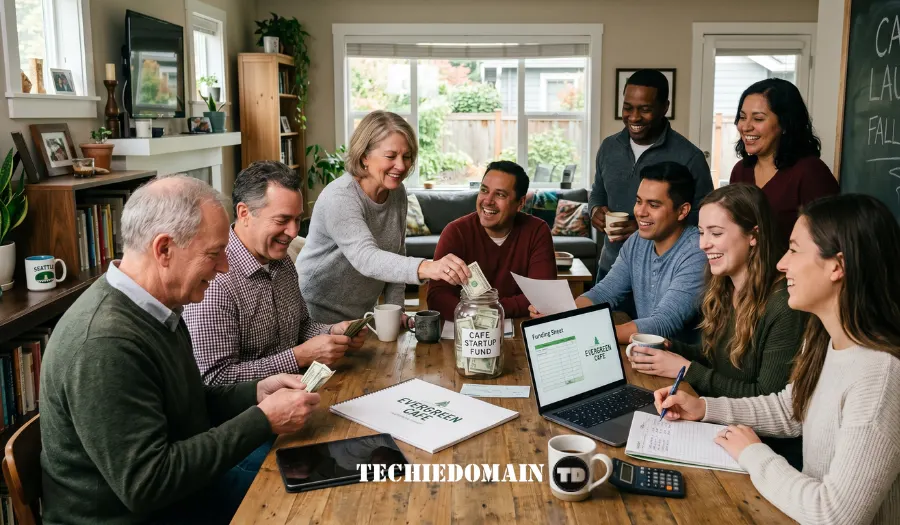
What it is: Informal investment from people in your personal network, typically structured as a loan or equity stake.
Best for: Pre-seed founders who need $10,000–$150,000 to build an MVP before approaching institutional investors.
- Pros: Fast, flexible terms, low documentation requirements
- Cons: Can damage personal relationships if the startup fails; agreements must still be formalized
Always document friends and family investments with a simple agreement — a convertible note or SAFE (Simple Agreement for Future Equity) is the industry standard.
3. Angel Investors
What it is: High-net-worth individuals who invest their personal capital in early-stage startups, typically in exchange for equity. Angel investors generally deploy $25,000 to $500,000 per deal.
Best for: Seed-stage startups with a working MVP, early customers, and a compelling founding team.
- Pros: Faster decisions than VCs, mentorship value, warm introductions to later investors
- Cons: Smaller check sizes; terms can vary widely
Where to find them: AngelList, Gust, local angel networks (e.g., New York Angels, Houston Angel Network), and accelerator demo days.
4. Venture Capital (VC)
What it is: Institutional investors who manage pooled capital from limited partners (LPs) and invest in high-growth startups in exchange for equity and board seats.
Best for: Startups with proven traction, a scalable business model, and the ambition to grow into a $100M+ company.
- Pros: Large capital infusions ($3M–$60M+), operational support, network access, credibility
- Cons: Significant equity dilution, loss of some control, pressure for rapid growth and eventual exit
US venture funding reached $280 billion in 2026 according to Crunchbase — the highest annual total in four years. Roughly 50% of that capital went to AI-related companies, but healthcare, fintech, and climate tech remain strong sectors for non-AI founders.
5. SBA Loans
What it is: Government-backed small business loans administered through the US Small Business Administration (SBA). The SBA does not lend directly — it guarantees a portion of loans issued by SBA-approved banks and credit unions, reducing lender risk and unlocking better terms for borrowers.
Best for: Startups that have some operating history, a solid business plan, and collateral — or founders who want to retain full equity.
- SBA 7(a) Loan: Up to $5.5 million; the most flexible program, covering working capital, equipment, and real estate
- SBA 504 Loan: For major fixed assets like commercial real estate and equipment
- SBA Microloan: Up to $50,000; ideal for very early-stage founders
Key stat: In 2024, the SBA supported over 100,000 loans totaling approximately $56 billion in capital, according to Indinero.
As of 2026, nearly 17% of all SBA 7(a) loan funds went to startups. While approval is achievable, most lenders want to see a detailed business plan, financial projections, and evidence of your ability to repay the loan.
6. Government Grants (SBIR / STTR)

What it is: Non-dilutive funding from federal agencies through the Small Business Innovation Research (SBIR) and Small Business Technology Transfer (STTR) programs. These grants do not require repayment or equity.
Best for: Science, technology, and research-based startups working on innovation that aligns with federal agency priorities (NIH, NSF, DoD, DoE).
- Phase I: Up to $275,000 to explore feasibility
- Phase II: Up to $1.83 million for R&D and commercialization
Where to apply: grants.gov, sbir.gov, and individual agency portals
SBIR and STTR grants are among the most underutilized funding sources in the US startup ecosystem. Because they are non-dilutive, they preserve your equity while providing substantial capital for product development.
7. Crowdfunding
What it is: Raising small amounts of capital from a large number of individuals, typically via online platforms. Two main types apply to startups: reward-based crowdfunding (Kickstarter, Indiegogo) and equity crowdfunding (Republic, Wefunder).
Best for: Consumer products, creative projects, or founders who want to validate demand and build a community simultaneously.
- Reward-based: Backers receive a product or perk, not equity. Great for hardware, games, and consumer brands
- Equity crowdfunding: Investors receive a small equity stake. Governed by Regulation Crowdfunding (Reg CF); you can raise up to $5 million per year from non-accredited investors
Pros: Market validation, community building, no traditional investor gatekeeping
Cons: Campaigns require significant marketing effort; failed campaigns are public
8. Accelerators and Incubators
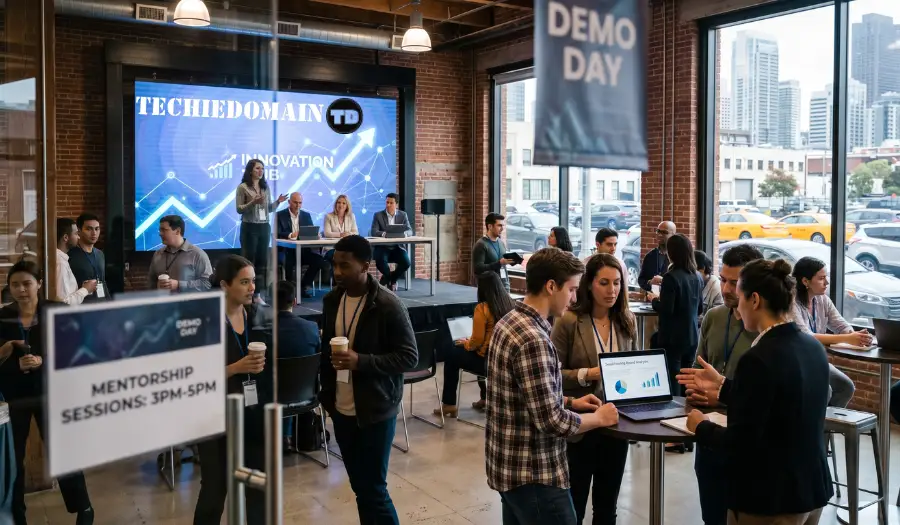
What it is: Structured programs that provide seed funding, mentorship, workspace, and investor introductions in exchange for a small equity stake (typically 5–10%). Accelerators are time-limited (3–6 months) and cohort-based. Incubators are longer-term and less structured.
Best for: Pre-seed and seed-stage founders who need more than just capital — mentorship, network access, and credibility matter just as much.
- Top US accelerators: Y Combinator ($500K for 7%), Techstars ($20K + $100K convertible note for 6%), 500 Global, AngelPad
Bonus: A Y Combinator or Techstars badge dramatically improves your odds of raising follow-on venture capital.
How to Choose the Right Funding for Your Startup
There is no universal best funding source — the right choice depends on your stage, industry, growth ambitions, and how much equity you are willing to give up. Use this decision framework:
- Stage check: If you are pre-revenue with no MVP, start with bootstrapping, friends and family, or an SBIR grant. Do not pitch VCs yet.
- Equity tolerance: If you want to keep maximum ownership, lean toward SBA loans, government grants, or revenue-based financing. If you are building a high-growth company and need speed, accept dilution from angels or VCs.
- Industry fit: Science and tech startups should always check SBIR/STTR eligibility first. Consumer product founders should evaluate Kickstarter before traditional investment.
- Timeline: Crowdfunding and accelerator applications can be executed in weeks. VC fundraising takes 6–12 months on average. SBA loans take 30–90 days.
- Your network: If you have strong warm connections to investors, raise angel or VC funding. Without a network, apply to accelerators or grants where relationships matter less at the entry point.
How to Apply for Startup Funding: Step-by-Step
- Build your pitch deck. Cover problem, solution, market size (TAM/SAM/SOM), business model, traction, team, financials, and the ask. Keep it to 10–12 slides.
- Prepare your financials. Create a 3-year revenue forecast, P&L projection, and cash flow model. Investors and SBA lenders both require this.
- Identify the right funding source. Match your stage and industry to the options above. Build a target list of 30–50 investors or 5–10 grant programs.
- Make contact. For investors, always seek warm introductions through your network. Cold emails to angel investors have a 3–5% response rate; introductions from mutual connections convert at 5–10x that rate.
- Submit your application or pitch. For accelerators, this means a formal application. For angels and VCs, it means an initial pitch meeting followed by due diligence.
- Navigate due diligence. Be prepared to share your cap table, contracts, IP ownership, and financial records. This process typically takes 4–8 weeks for institutional investors.
- Close the round. Sign term sheets, complete legal documentation, and receive funds. Work with a startup-experienced attorney to review all agreements.
Frequently Asked Questions
How much funding do startups typically raise in the US?
It varies significantly by stage. The average seed round in 2026 is approximately $2.2 million, while the average Series A is $15.7 million. Pre-seed rounds often fall between $50,000 and $500,000. Keep in mind that a small number of very large AI rounds skew these averages upward.
Can I get startup funding with no revenue?
Yes. Pre-revenue startups can raise pre-seed and seed funding from angel investors, friends and family, and accelerators. Government grants through the SBIR program are also available to pre-revenue technology startups. SBA loans are more challenging without revenue but not impossible with strong personal credit, collateral, and a convincing business plan.
What is the best funding source for a first-time founder?
Most first-time founders benefit most from applying to an accelerator program like Y Combinator or Techstars. These programs provide capital, structured mentorship, and a powerful alumni network — all of which improve your odds of raising follow-on funding. If you are not yet ready for an accelerator, bootstrapping to your first paying customer is the strongest foundation you can build.
What is the difference between a grant and an investment?
A grant is non-dilutive funding that does not require repayment or equity. SBIR/STTR grants from the US federal government are the most significant example for startups. An investment is capital provided in exchange for equity (ownership) in your company or a debt instrument that converts to equity later. Grants are preferable when available because they preserve your ownership.
How do I find angel investors in the United States?
The most effective channels are warm introductions through your personal and professional network, accelerator programs and demo days, AngelList and Gust (online platforms), LinkedIn outreach to angels who have invested in companies similar to yours, and local angel networks in major startup hubs like New York, Austin, Los Angeles, Boston, and the Bay Area.
Conclusion
Funding opportunities for startups in the US have never been more diverse. Whether you bootstrap, tap government grants, raise from angels, or pursue venture capital, the right path depends on where you are today — not where you hope to be.
Start by understanding your stage, matching your funding source to your needs, and building relationships before you need the money. The founders who raise successfully are rarely the ones with the best ideas alone. They are the ones who understand the funding landscape, prepare rigorously, and reach the right people at the right time.
Review your options using the framework in this guide, take your next step today — and remember that most successful companies combined multiple funding sources on their path to scale.