
Every single day, over 1,400 new innovative startups 2026 are born somewhere on this planet — and the most exciting ones are no longer clustered in San Francisco (Startup Genome, 2025). The unique startups around the world rewriting the rules of business are emerging from Lagos, Tallinn, São Paulo, and Bangalore, armed with radical ideas, lean teams, and relentless founder stories that defy conventional wisdom.
For the USA audience watching global trends, this matters enormously. The next billion-dollar unicorn startup could be incubating right now in a city you've never visited, solving a problem you didn't know existed. In this article, you'll discover 10 of the world's most disruptive startups worldwide, understand what makes each one uniquely powerful, and extract lessons directly applicable to your own entrepreneurial journey in 2026.
What Makes a Startup "Unique"?
Before diving in, it's worth defining the term. A unique startup is not simply one that offers a novel product. It is a company that combines an unconventional business model, a deep understanding of product-market fit, and an ability to solve problems that traditional industries have ignored for decades. In the context of global entrepreneurship, uniqueness often means operating at the intersection of culture, technology, and urgent human need.
These are not just bootstrapped startups experimenting in a garage. Many have raised seed funding rounds, progressed to Series A / B / C funding, and are now being tracked by powerhouse investors like Y Combinator, Sequoia Capital, and a16z. What distinguishes them is how they think, not just what they build.
Top Unique Startups Around the World in 2026
1. Carry1st — Johannesburg, South Africa
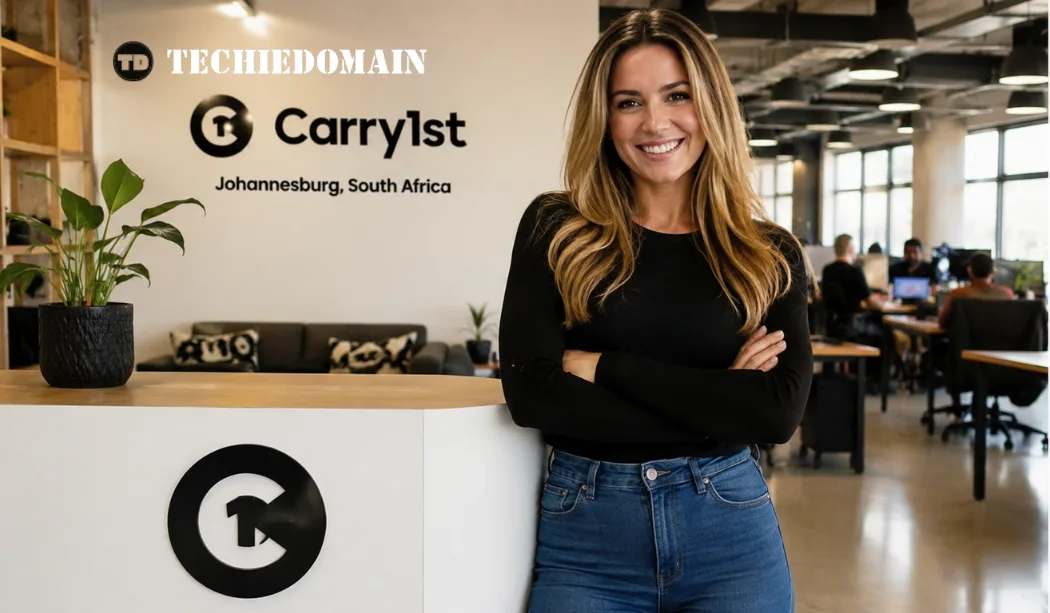
Sector: Mobile Gaming & FinTech | Funding Stage: Series B
Carry1st is redefining what mobile gaming means for the African continent. Founded by Cordel Robbin-Coker and Lucy Hoffman, this Johannesburg-based startup recognized a critical gap: over 600 million Africans had smartphones but no reliable digital payment infrastructure to purchase in-game content.
Their solution combines a mobile-first gaming platform with a proprietary digital payments layer called Pay1st — making them one of the rare companies operating at the intersection of FinTech and entertainment. Backed by a16z and Riot Games, Carry1st has raised over $27 million and is now the leading games publisher in Sub-Saharan Africa. For American entrepreneurs, the takeaway is clear: payment infrastructure is not a solved problem globally, and that gap is a startup ecosystem goldmine.
2. Bolt — Tallinn, Estonia
Sector: Mobility & Micro-Mobility | Funding Stage: Late-Stage / Pre-IPO
Founded by Markus Villig at just 19 years old, Bolt is one of Europe's most remarkable bootstrapped startup origin stories that grew into a unicorn valuation giant. Operating in 45+ countries across Europe and Africa, Bolt offers ride-hailing, e-scooters, food delivery, and car-sharing — all within a single super app ecosystem.
What makes Bolt a textbook case in disruptive startups worldwide is its asset-light model and hyper-local pricing strategy. While Uber burned billions entering new markets, Bolt entered with localized driver rates and leaner tech innovation hubs operations. Bolt's valuation now exceeds $8.4 billion. The lesson for US entrepreneurs: speed and frugality can outmaneuver capital in emerging startup ecosystems.
3. Khatabook — Bangalore, India
Sector: SMB FinTech / Digital Ledger | Funding Stage: Series C
India has over 60 million small businesses, and the majority still track credit and payments using paper notebooks. Khatabook — meaning "account book" in Hindi — replaced that paper with a free, offline-first mobile app that allows merchants to record transactions digitally, send payment reminders via WhatsApp, and access micro-loans.
With Series B and Series C funding rounds totaling over $100 million from investors including Y Combinator and Sequoia Capital's India arm, Khatabook reached 10 million merchants within 18 months of launch — one of the fastest product-market fit stories in Southeast Asian startup history. The NLP keyword here is frictionless financial inclusion, and it's a model that could be replicated in Hispanic small business communities across the United States.
4. Frubana — Bogotá, Colombia
Sector: AgriTech / B2B Food Supply | Funding Stage: Series B
Frubana is transforming the broken food supply chain across Latin America. In Colombia, Ecuador, and Brazil, over 70% of food sold through small restaurants and street vendors is sourced from inefficient middlemen, driving prices up by 30–50%. Frubana built a B2B AgriTech platform that connects farmers directly to small food businesses, cutting out the supply chain entirely.
Backed by Softbank Latin America Fund and having raised over $65 million, Frubana is now processing thousands of tons of fresh produce weekly. This is global entrepreneurship at its most impactful — a DeepTech-adjacent logistics play driven by data intelligence rather than physical infrastructure. American food-tech investors and angel investors should be paying close attention.
5. Licious — Bangalore, India
Sector: D2C Fresh Meat & Seafood | Funding Stage: Unicorn ($1B+ valuation)
Licious became India's first unicorn startup in the D2C meat and seafood category — a fact that surprises most Western observers unfamiliar with India's rapidly growing premium consumer class. The startup built an end-to-end cold chain from farm to fork, ensuring freshness in a market where 90% of fresh meat was previously sold in unhygienic open markets.
With venture capital funding from Temasek, IIFL, and 3one4 Capital, Licious now serves 25+ Indian cities. Their exit strategy is being closely watched, with an IPO anticipated in 2026. The key insight for US entrepreneurs: product-market fit in underdeveloped distribution markets often creates more defensible moats than pure technology plays.
6. Andela — Lagos, Nigeria / New York, USA
Sector: Human Capital / Tech Talent Marketplace | Funding Stage: Series F ($200M+)
Andela started with a bold thesis: that world-class software engineering talent exists everywhere, but opportunity does not. Operating across Lagos, Nairobi, Cairo, and now globally, Andela trains and places African developers with top US and European companies as remote engineers.
Having raised over $381 million with backing from a16z and the Chan Zuckerberg Initiative, Andela is a masterclass in SaaS-adjacent marketplace building. The company represents one of the most impactful top startups outside Silicon Valley ever created, and its model has proven that global entrepreneurship and social impact are not mutually exclusive. For USA-based tech companies, Andela is also a direct, cost-effective hiring solution.
7. SWVL — Cairo, Egypt
Sector: Mass Transit Tech | Funding Stage: NASDAQ-listed
SWVL is reengineering public transportation in developing markets by deploying a SaaS platform on top of existing bus networks. Rather than buying buses, SWVL aggregates private minibuses and assigns them smart, optimized routes via its app — reducing commuter costs by up to 40% in cities like Cairo, Nairobi, and Lahore.
The company made history as the first Arab tech startup to list on NASDAQ via a SPAC merger. As a case study in CleanTech-adjacent urban mobility, SWVL demonstrates that disruptive startups worldwide don't need to build from scratch — they need to add intelligence to broken systems. The startup ecosystem lesson: constraint breeds creativity.
8. Meesho — Bangalore, India
Sector: Social Commerce | Funding Stage: Unicorn / Pre-IPO
Meesho is India's answer to a question few American entrepreneurs thought to ask: what if anyone — including a homemaker in a small town with no formal business experience — could become an online reseller? Meesho's social commerce platform allows users to resell products from its catalog via WhatsApp and Instagram, earning a margin with zero upfront investment.
With over 150 million transacting users and backing from Sequoia Capital, Facebook (now Meta), and SoftBank, Meesho is valued at over $4.9 billion. It targets 100+ million micro-entrepreneurs, mostly women in Tier 2 and Tier 3 Indian cities. The model is already being studied by venture capital funding firms looking to replicate it in Southeast Asia and Sub-Saharan Africa.
9. Wayflyer — Dublin, Ireland
Sector: Revenue-Based Financing / FinTech | Funding Stage: Series B
Wayflyer is solving one of the most painful problems for e-commerce brands: cash flow gaps between inventory investment and revenue return. Their AI-powered revenue-based financing platform analyzes a brand's sales data and offers instant funding — repaid as a percentage of daily revenue, with no equity dilution.
Having originated over $1 billion in funding to e-commerce businesses since 2019, Wayflyer is backed by DST Global and Airtree Ventures. For US DTC (direct-to-consumer) brands, Wayflyer is already operational and growing fast. It represents a new wave of FinTech innovation emerging from Europe's emerging startup ecosystems — proving that innovative startups 2026 don't need to be headquartered in New York or San Francisco to serve the American market directly.
10. Nori — Seattle, USA (with Global Impact)
Sector: CleanTech / Carbon Removal Marketplace | Funding Stage: Series A
Rounding out our list is an American CleanTech startup with a global mission. Nori has built the world's first marketplace for carbon removal — allowing businesses to directly purchase verified tonnes of atmospheric carbon removed through regenerative agriculture. Unlike traditional carbon offset markets plagued by fraud and opacity, Nori uses blockchain verification and independent third-party auditing.
Backed by Y Combinator and holding a seed funding round that progressed to Series A, Nori represents the new archetype of purpose-driven startups: companies where the exit strategy is inherently tied to planetary outcomes. As ESG investing continues to dominate venture capital funding decisions in 2026, Nori's model is a blueprint for American entrepreneurs looking to build in the CleanTech space.
What Investors Are Looking For in Unique Startups (2026)
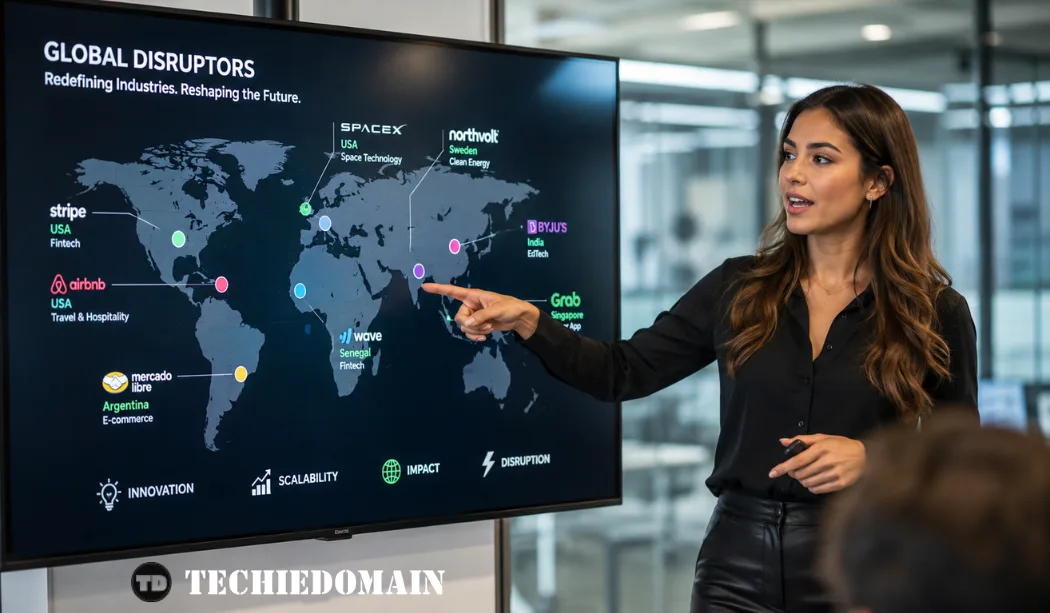
The criteria that top venture capital funding firms like Sequoia Capital, a16z, and Y Combinator apply have shifted significantly in 2026. Here's what the smartest capital in the world is chasing:
Emerging market tailwinds — Firms are aggressively backing companies in emerging startup ecosystems across Africa, Southeast Asia, and Latin America, where middle-class growth is outpacing Western markets. Distribution moats — In markets like India and Nigeria, the ability to reach customers efficiently is a deeper moat than technology itself. Startups that solve the last-mile problem command premium unicorn valuations. AI-native infrastructure — Whether in DeepTech, FinTech, or AgriTech, angel investors and institutional VCs are prioritizing companies where AI is core to the product, not a feature. Climate-aligned models — CleanTech and carbon-negative business models are receiving outsized allocation as regulatory pressure and ESG mandates increase globally. Proven product-market fit at scale — Gone are the days of Series A / B / C funding based on vision alone. Investors demand traction: users, revenue, retention, and a clear exit strategy path.
Lessons American Entrepreneurs Can Learn
The global startup ecosystem offers a masterclass in what it means to build without the safety net of abundant capital, perfect infrastructure, or a wealthy consumer base. Here are the core lessons:
Constraint is a feature, not a bug. Some of the most resilient bootstrapped startups emerged from markets where failure was not an option. Localization beats globalization early. The startups on this list succeeded by going deep in one market before expanding — a principle that contradicts the "go big immediately" culture of Silicon Valley. The problem defines the market. Companies like Khatabook and Carry1st didn't create demand — they discovered pain points invisible to outsiders and built directly on top of them. Community is a distribution channel. Meesho's use of WhatsApp as a social commerce backbone is a model US startups are only beginning to explore seriously.
How to Discover and Track Innovative Startups Globally
For entrepreneurs, investors, and analysts in the USA audience who want to stay ahead of global entrepreneurship trends, here are the best platforms to monitor the global startup ecosystem in real time:
Crunchbase — The gold standard for tracking venture capital funding, seed funding rounds, and Series A / B / C activity across every continent. PitchBook — Institutional-grade data on unicorn valuations, exit strategy timelines, and angel investors active by sector and geography. Startup Genome — Annual reports on the world's best global startups to watch and benchmarks for emerging startup ecosystems. TechCrunch & Rest of World — Editorial coverage of disruptive startups worldwide with particular depth on non-Western markets. Y Combinator's Top Companies list — A curated index of the highest-performing alumni, updated regularly with funding and valuation milestones.
Conclusion
The era of unique startups around the world being led exclusively by Silicon Valley is definitively over. From a 19-year-old in Tallinn disrupting ride-hailing across two continents, to a carbon marketplace in Seattle reimagining how businesses offset their climate impact, the global startup ecosystem in 2026 is richer, more diverse, and more innovative than at any point in history.
For American entrepreneurs, the opportunity is not just to observe these innovative startups 2026 — it is to collaborate with them, invest in them, and borrow their most powerful playbooks. The next great American company may well be inspired by a founder story that begins in Lagos or Bogotá. Stay curious, stay global, and stay ahead.
Frequently Asked Questions
Q1: What are the most innovative startups in the world in 2026?
According to Crunchbase and Startup Genome data, the most innovative startups in 2026 include companies like Carry1st (Africa gaming-FinTech), Khatabook (India SMB digitization), and Nori (CleanTech carbon removal) — all of which are building novel solutions at the intersection of technology, underserved markets, and scalable product-market fit.
Q2: Which country has the most unique startups outside the USA?
India currently leads the world in total unicorn startup creation outside the United States, with over 100 unicorns as of 2025. However, in terms of per-capita innovation density, Israel (Tel Aviv) and Estonia (Tallinn) consistently produce the highest ratio of disruptive startups worldwide relative to population size.
Q3: What makes a startup successful globally?
Global startup success consistently comes down to four factors: a clearly defined product-market fit in an underserved segment, a distribution strategy that accounts for local infrastructure, access to venture capital funding or sustainable bootstrapped startup economics, and a founding team with deep domain expertise and a compelling founder story.
Q4: How do I find unique startups to invest in as a US-based angel investor?
US-based angel investors can identify best global startups to watch through Crunchbase Pro, PitchBook, AngelList, and attending global accelerator demo days from Y Combinator, Techstars, and 500 Global. Following regional tech media like TechCabal (Africa), e27 (Southeast Asia), and Sifted (Europe) also surfaces deals before they hit mainstream radar.
Q5: What startup ecosystems are growing fastest in 2026?
The fastest-growing emerging startup ecosystems in 2026 are Lagos (Nigeria), Cairo (Egypt), Jakarta (Indonesia), Bogotá (Colombia), and Warsaw (Poland). Each of these cities is experiencing a compound effect of rising smartphone penetration, a growing middle class, improving regulatory environments, and increasing access to seed funding rounds from both local and international venture capital funding firms.