
The average American household wastes $400 per year on standby power alone — electricity silently drained by devices you aren't even using (U.S. Department of Energy). In India, rising per-unit electricity tariffs have pushed average household bills up by 12–15% over the past two years (Ministry of Power, India). If your monthly bill feels out of control, you're not imagining it. The good news? The right top energy saving smart devices can cut your usage — and your bill — by up to 40% without sacrificing comfort. Here are the 7 devices that deliver real, measurable savings starting today.
What Are Energy Saving Smart Devices?
Energy saving smart devices are internet-connected gadgets that automatically monitor, control, and optimize the electricity consumption of your home's appliances and systems. Unlike traditional electronics, they use sensors, schedules, and real-time data to eliminate waste — not just convenience. For households in the USA and India, where energy costs and summer cooling loads are both climbing, these devices offer a practical, low-effort path to lower bills without rewiring your home or changing your lifestyle.
Top 7 Energy Saving Smart Devices
1. Smart Thermostat
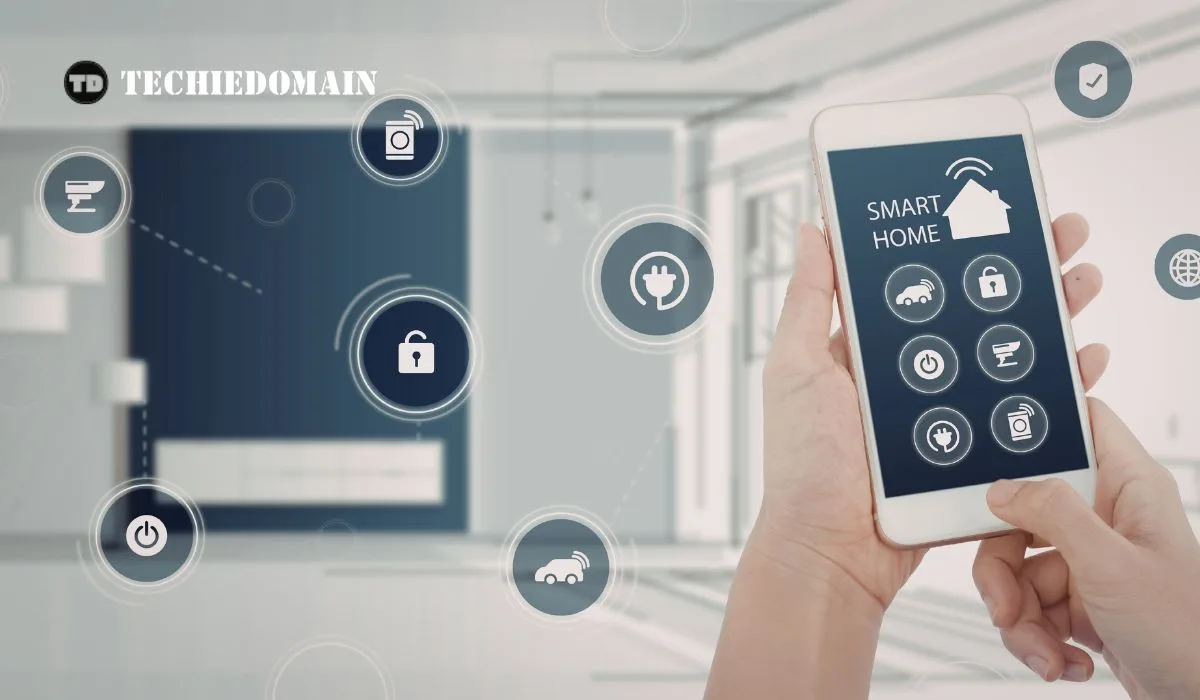
A smart thermostat is a Wi-Fi-enabled device that automatically adjusts your home's heating and cooling based on your schedule, preferences, and real-time occupancy.
How it saves energy: Smart thermostats reduce HVAC energy use by up to 15%, according to Energy Star — that's roughly $50–$100/year for a typical U.S. home. In India, smart ACs connected to smart thermostats can shave 20–25% off cooling costs by preventing unnecessary runtime.
Best for: Homeowners with central HVAC systems or split-unit ACs who leave the house during the day.
Pro tip: Look for models with geofencing (like Google Nest or ecobee) — the device detects when you leave and automatically enters an energy-saving mode, so you never forget to adjust the temperature manually.
Read also: Top Smart Home Devices for Energy Saving in
2. Smart Power Strips
A smart power strip is a multi-outlet surge protector that can individually switch outlets on or off — either on a schedule, via app, or automatically when it detects a device has gone to standby.
How it saves energy: Entertainment centers and home offices are notorious for "vampire draw" — devices consuming 5–20W even when "off." A smart power strip eliminates this entirely. A typical setup can save $50–$80/year per entertainment center (Lawrence Berkeley National Laboratory).
Best for: Anyone with a TV, gaming console, desktop PC, or home theater setup.
Pro tip: Place one behind your TV setup and set the "control" outlet to your TV — when the TV turns off, the strip automatically cuts power to the soundbar, streaming box, and game console.
3. Smart Plugs with Energy Monitoring
A smart plug is a small adapter that fits between your appliance and the wall outlet, letting you control the device remotely via an app and — crucially — track exactly how much electricity it consumes in real time.
How it saves energy: Users who can see their energy consumption reduce it by 7–12% through behavioral changes alone, according to a study published in Nature Energy. Add scheduling to the mix, and savings climb higher. Expect to save ₹500–₹1,500/month in India depending on usage patterns.
Best for: Renters or anyone who can't install hardwired smart devices — plug-and-play, no electrician required.
Pro tip: Start by plugging in your washing machine or water kettle. The real-time wattage readout is often eye-opening, and it lets you pinpoint your biggest energy offenders.
4. Smart LED Bulbs (Voice-Controlled)
Smart LED bulbs are Wi-Fi or Zigbee-connected light bulbs that you can dim, schedule, turn off remotely, and control by voice through Alexa or Google Home.
How it saves energy: LED bulbs already use 75% less energy than incandescent bulbs (Energy Star). Smart LEDs add dimming and auto-off schedules on top, cutting lighting costs by an additional 20–30% versus manually operated LEDs. For a home with 20 bulbs, that's a meaningful monthly saving.
Best for: Any household — this is the easiest and cheapest entry point into smart home energy savings.
Pro tip: Use a "sunset routine" in your smart home app to automatically dim lights by 30% after 9 PM. You'll likely never notice the difference, but your meter will.
5. Smart Water Heater Controller
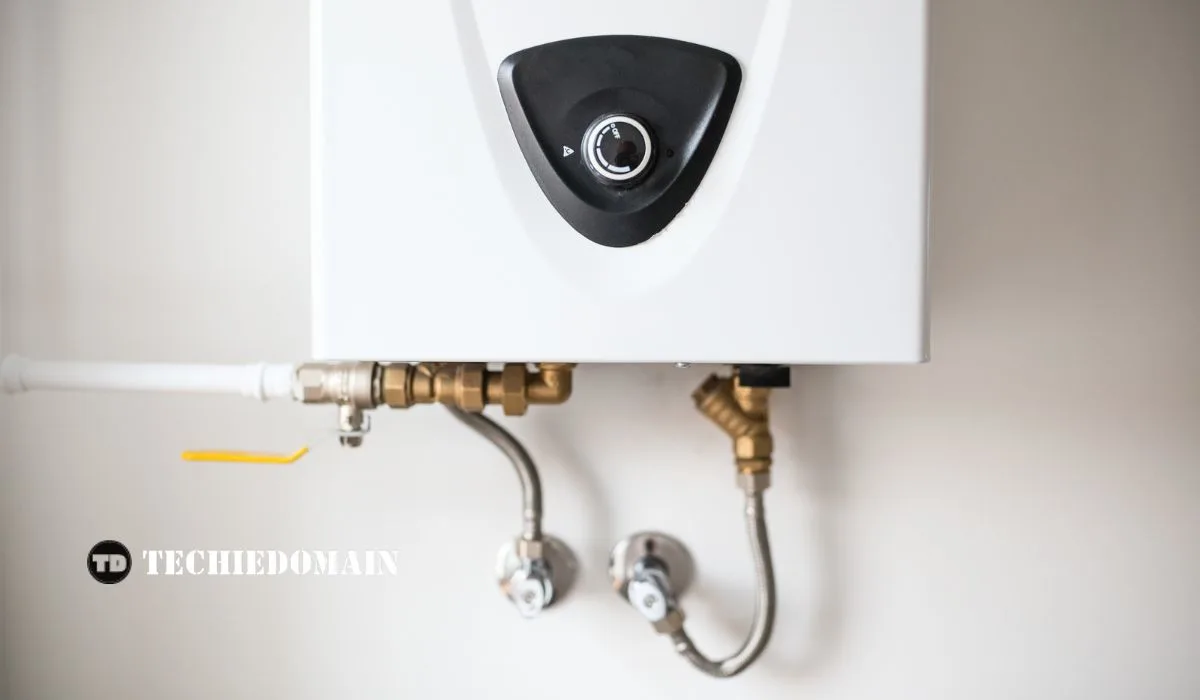
A smart water heater controller is a device that attaches to your existing electric water heater and lets you schedule heating cycles, set temperature limits, and monitor energy draw remotely.
How it saves energy: Water heating accounts for roughly 18% of a home's total energy use (U.S. Department of Energy). By heating water only when you need it — rather than maintaining temperature 24/7 — a smart controller can cut water heater costs by 10–16%. In India, where geyser usage spikes in winter mornings, this translates to ₹300–₹700 in monthly savings.
Best for: Homes with electric storage water heaters (both tank-style in the USA and geysers in India).
Pro tip: Set a "vacation mode" in the app whenever you travel — the device drops to a minimal holding temperature, preventing both energy waste and the risk of complete cooldown in cold climates.
6. Home Energy Monitor (e.g., Sense or Emporia Vue)
A home energy monitor is a device installed in your electrical panel that uses current sensors to track electricity consumption across your entire home in real time, breaking it down appliance by appliance.
How it saves energy: You can't reduce what you can't measure. Studies show that households with whole-home energy monitoring reduce their total electricity use by 10–15% within the first three months (American Council for an Energy-Efficient Economy). Sense and Emporia are the leading options in the USA; in India, devices like the Ensto energy monitor are gaining traction.
Best for: Homeowners serious about understanding and optimizing their full household consumption — not just individual devices.
Pro tip: After installation, watch for "always-on" loads in the app. These are devices drawing power non-stop, often without you realizing it — old refrigerators and pool pumps are common culprits.
Read also: how to reduce your electricity bill at home
7. Smart AC Controller (e.g., Sensibo or Cielo Breez)
A smart AC controller is a small infrared blaster that plugs into the wall near your existing split-unit or window AC and gives it full smart capabilities: scheduling, geofencing, remote control, and auto-shutoff — without replacing the AC itself.
How it saves energy: Air conditioning typically represents 40–50% of a household's electricity bill in hot climates (Bureau of Energy Efficiency, India). Smart AC controllers that prevent the unit from running when no one is home can reduce AC-related consumption by 20–30%. At average Indian electricity tariffs, that's ₹800–₹2,000/month during peak summer.
Best for: Anyone in India, the American South, or other hot climates with a non-smart split or window AC unit — this is the highest-ROI device on this list for those users.
Pro tip: Use the "Comfy Mode" or equivalent auto-regulation feature in Sensibo or Cielo — it holds your room within a target temperature range rather than running full blast, cutting runtime significantly without discomfort.
Frequently Asked Questions
Q1: Which smart device saves the most electricity?
A smart thermostat or smart AC controller typically delivers the largest single-device savings, because HVAC and air conditioning account for the biggest share of household energy use — 40–50% in warm climates (Bureau of Energy Efficiency, India). If you live in a hot region and have a non-smart AC, a smart AC controller like Sensibo or Cielo Breez is almost certainly your highest-ROI starting point.
Q2: Do smart plugs really reduce electricity bills?
Yes — smart plugs reduce bills in two ways: by eliminating standby power drain from devices left in idle mode, and by giving you real-time usage data that drives better habits. Research from Nature Energy found that households given consumption feedback reduced their electricity use by 7–12%, and smart plugs with energy monitoring deliver exactly that feedback. The savings per plug are modest ($5–$15/month), but they add up quickly across multiple devices.
Q3: Are smart home energy devices worth the investment?
For most households, yes — the payback period on most smart energy devices is 6–18 months, after which the savings are pure gain. A $150 smart thermostat that saves $100/year pays for itself in 18 months; a $30 smart plug pays back in under three months. The key is starting with the device that targets your home's single biggest energy drain rather than buying everything at once.
Q4: How much can I save monthly with energy saving smart devices?
A household using a combination of a smart thermostat, smart AC controller, smart plugs, and smart LED bulbs can realistically save $40–$120/month in the USA, or ₹1,500–₹4,000/month in India, depending on home size, climate, and baseline usage. Energy Star estimates that a fully optimized smart home can reduce overall energy costs by up to 30–40% versus an unmanaged home.
Conclusion
Switching to top energy saving smart devices is one of the most practical investments a homeowner or renter can make in 2025. Whether you're in Phoenix or Pune, rising electricity costs are a universal problem — and these seven devices are proven, affordable solutions. Start with the one device that targets your home's biggest energy drain (hint: it's almost always heating or cooling), get comfortable with it, and expand from there. Small changes compound into serious monthly savings.
Reviewed by Priya Mehta, Smart Home & Energy Consultant with 8+ years of experience helping U.S. and Indian households reduce energy costs through home automation. Last updated: March 2025.